Links are not yet activated.
To activate, add a link back to submitpr.org from your website and contact @jaycosta on Telegram,
or pay via Solana (from $19.95) for instant activation.
An asset tokenization platform gives businesses a way to represent ownership or economic rights connected to real-world assets through blockchain-based tokens. The concept is straightforward, but the work behind it involves asset records, investor onboarding, compliance, smart contracts, wallets, and ongoing administration.Real estate, funds, commodities, bonds, and private credit can all have different ownership structures. For that reason, real world asset tokenization works best when the legal model, investor journey, and technology are planned together.
What Is an Asset Tokenization Platform?
An asset tokenization platform is a digital system used to create, issue, manage, and track tokens connected to an underlying asset. Depending on the structure, a token can represent ownership, a fractional interest, a revenue right, or another defined claim.
The platform can bring asset onboarding, investor verification, token issuance, wallet connections, transaction records, and reporting iwnto one workflow. This makes the technology useful beyond the initial token launch.
For businesses, the goal is not simply to place an asset on a blockchain. The digital representation needs to remain connected to the rights, records, and rules surrounding the underlying asset.
Why Businesses Are Looking at Real-World Asset Tokenization
Real world asset tokenization has attracted attention because traditional asset transactions can involve paperwork, manual records, multiple intermediaries, and high entry requirements.
Tokenization can create digital records for ownership or participation and may support fractional structures where the legal and commercial model allows them. It can also make certain administrative processes easier to track.
A platform can bring these activities into a shared system, giving issuers and investors a clearer view of assets, holdings, transactions, and related documents.
Still, tokenization is not automatically suitable for every asset. The business case depends on the asset type, ownership structure, investor demand, jurisdiction, and reason for creating the digital representation.
How an RWA Tokenization Platform Works
An rwa tokenization platform normally starts with the underlying asset. The issuer needs to establish what is being tokenized, what rights the token represents, who can participate, and how transfers will be handled.
After that, smart contracts can be designed around issuance, transfers, distributions, redemptions, and other predefined actions. An rwa tokenization platform can also support the investor side, including registration, identity checks, document access, payments, wallets, and portfolio information.
This is why an rwa tokenization platform is different from a simple token generator. It needs to support the asset throughout its operating lifecycle.
What Can Be Tokenized?
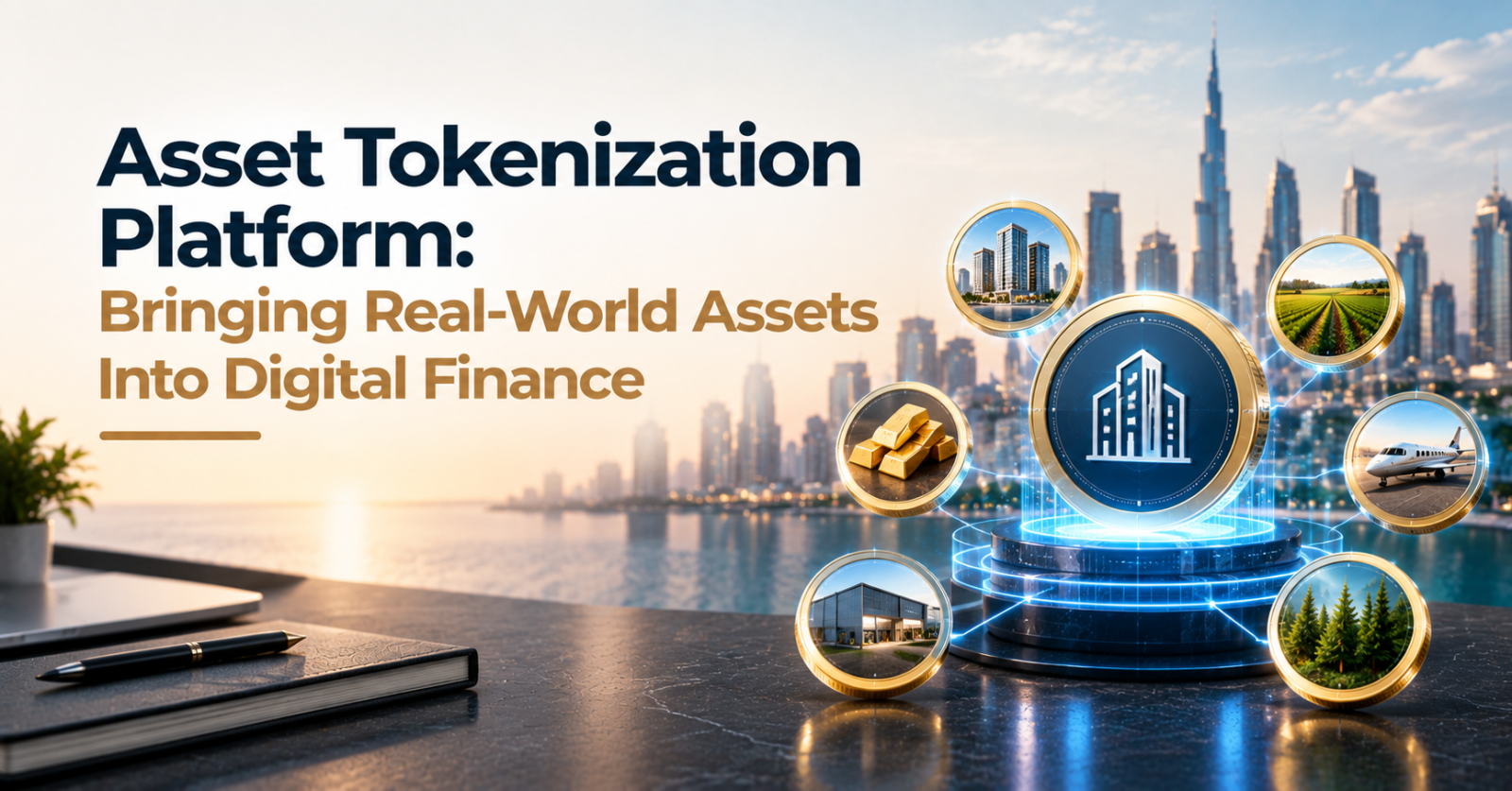
Real estate is a familiar use case, but real world asset tokenization can extend to funds, commodities, bonds, private credit, infrastructure, and other assets where a suitable legal structure exists.
A property-based offering may require ownership documents, valuation information, and rules for fractional participation. A fund may need investor eligibility checks, subscription processes, and distribution mechanisms.
The technology should follow those requirements. A clear real world asset tokenization model should come before technical choices.
Businesses should avoid selecting a generic structure first and then trying to force the asset into it.
Features That Matter in Tokenization Platforms
Modern platforms can include several connected components:
Asset onboarding and document management
Token issuance and smart contract controls
Investor registration and verification
Wallet and custody connections
Ownership and transaction records
Compliance and transfer restrictions
Portfolio and reporting dashboards
Payment integrations
Secondary-market readiness
These features become useful when they work together. An investor should not have to move between unrelated systems for every stage of the investment journey.
For issuers, asset tokenization platforms can also simplify the management of investor records, holdings, transactions, and ongoing reporting.
Choosing RWA Tokenization Companies
Rwa tokenization companies can support businesses with the technical and operational side of a project. Their work may cover token design, smart contracts, investor onboarding, compliance workflows, wallet integration, asset management, and marketplace functionality.
When comparing providers, businesses should look beyond a long feature list. Experience with the relevant asset class, security practices, integration capabilities, and post-launch support can matter just as much as the technology itself.
The provider should understand the role of rwa tokenization companies in connecting technology with the underlying business model.
The right partner should understand how these providers approach the full lifecycle rather than treating every project as another token issuance.
Compliance and Investor Protection
Compliance needs to be considered before development begins. Depending on the asset and market, the platform may need KYC and AML checks, investor eligibility rules, transfer restrictions, transaction monitoring, and audit records.
Rwa tokenization companies working on regulated offerings should be able to build these requirements into the wider platform architecture rather than treating them as a final add-on.
An asset tokenization platform may also need clear permission levels for issuers, administrators, investors, and other participants. These controls help define who can view information, approve actions, issue tokens, or process transfers.
Building for the Full Asset Lifecycle
The token launch is only one stage of the process. After issuance, investors may need portfolio information, distributions, transaction history, documents, and updates.
Issuers may need ownership records, reporting tools, corporate action workflows, and investor communication features. Tokenization platforms can bring these functions into one operating environment.
A secondary marketplace may also be part of the long-term plan. However, tokenization alone does not guarantee liquidity. A functioning market still requires eligible participants, demand, appropriate rules, and a structure that supports trading.
The Role of an Asset Tokenization Development Company
An asset tokenization development company can help translate the business model into a technical architecture. That can include choosing the blockchain environment, designing smart contracts, connecting wallets, building dashboards, integrating compliance tools, and preparing the platform for future marketplace activity.
Before development begins, an asset tokenization development company can help map the architecture around the asset, investor model, and operating requirements.
Those decisions provide the foundation for the technology. The development partner can then turn them into a practical technical build.
What Businesses Should Consider
Before choosing an asset tokenization platform, businesses should ask a few practical questions:
What problem is tokenization solving?
What rights does each token represent?
Who can invest or hold the token?
Which jurisdictions are involved?
How will investor verification work?
How will assets and ownership be recorded?
What blockchain and wallet infrastructure are required?
What happens after issuance?
The answers can help determine whether an existing solution is enough or whether a custom build makes more sense.
For companies exploring platforms, the starting point should be the asset, the investor model, and the commercial purpose. An rwa tokenization platform can be evaluated alongside these platforms, while rwa tokenization companies and an asset tokenization development company can be assessed for the support they provide.
A Practical Way to Approach Development
An rwa tokenization platform should be planned around the asset, investor journey, and operating model rather than selected only for its technical features. Rwa tokenization companies can help map those requirements into a working product, while an asset tokenization development company can handle the technical architecture.
Where Real-World Asset Tokenization Is Going
The focus around real world asset tokenization is shifting toward practical applications. Property, funds, credit, commodities, and other assets can benefit from digital records when the underlying business and legal structure support them.
A well-planned platform should connect the asset, investors, compliance rules, ownership records, and digital transactions rather than treating token issuance as an isolated feature.
Businesses also need to think about long-term administration. The platform should remain useful after the initial offering, when investors need updates, distributions, transfers, and reporting.
Final Thoughts
An rwa tokenization platform can support the full journey from asset preparation to investor management. Rwa tokenization companies can bring legal, operational, and technical requirements into one development process. An asset tokenization development company can then build the required infrastructure.
Tokenization can give businesses another way to structure ownership, investment access, and asset administration. Its value depends on the relationship between the underlying asset and the digital system built around it.
For companies exploring platforms, the starting point should be the asset, the investor model, and the commercial purpose. Businesses can compare asset tokenization platforms against those requirements before making a final choice.
Businesses looking for an asset tokenization development company can compare these platforms and explore Ment Tech's approach to custom RWA infrastructure, including token issuance, investor onboarding, compliance workflows, wallets, and asset management. Learn more about the asset tokenization platform development services.