Links are not yet activated.
To activate, add a link back to submitpr.org from your website and contact @jaycosta on Telegram,
or pay via Solana (from $19.95) for instant activation.
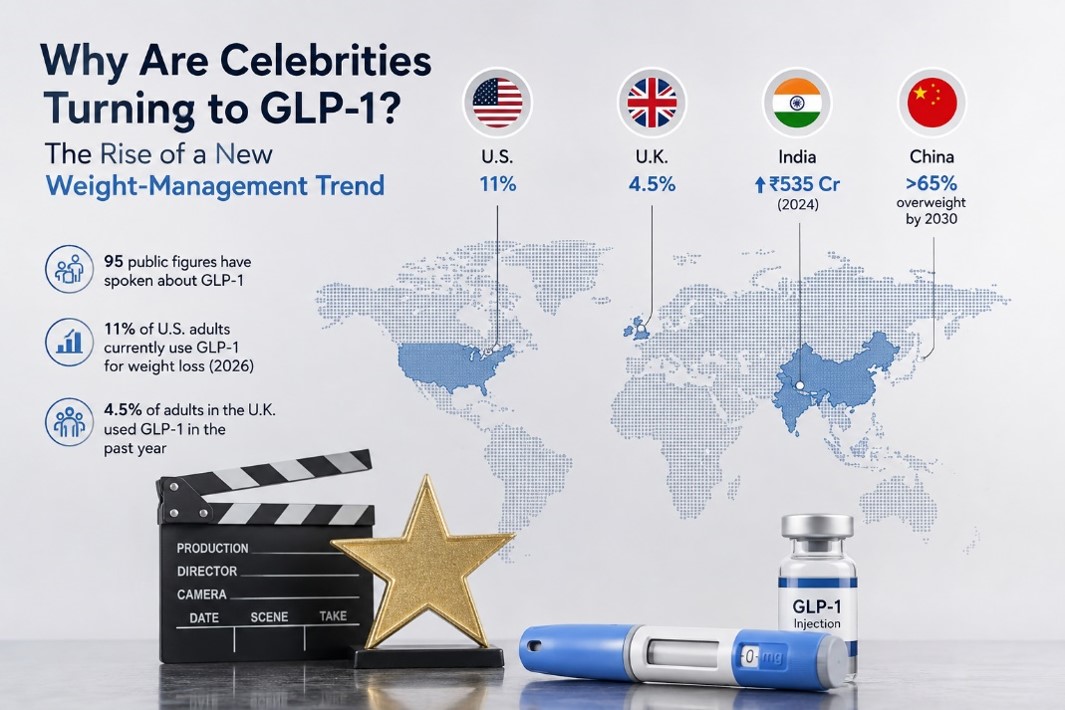
GLP-1 medicines have moved beyond diabetes care and become a major part of the global weight-loss conversation. Celebrities, influencers and athletes have helped make treatments such as GLP-1 and GLP-1/GIP medicines more familiar to the public.A December 2025 compilation identified 95 public figures who had publicly discussed GLP-1 medicines, including their benefits, side effects and experiences with weight loss.
Why is interest rising? Better awareness, visible weight-loss results, social media and growing acceptance of medical weight management are bringing GLP-1 treatment into mainstream conversations.
Why Are Celebrities Using GLP-1?
Celebrities often face intense pressure around appearance, body weight and fitness. Some have also discussed obesity, diabetes, appetite control or difficulty maintaining weight despite diet and exercise.
For public figures, GLP-1 treatment can become part of a broader health routine that includes nutrition, exercise and professional medical support.
Why does celebrity use matter? A familiar face can make unfamiliar medical treatment feel more accessible, encouraging audiences to learn more or speak with healthcare professionals.
Celebrity Stories Can Drive Consumer Interest
Celebrity disclosures can quickly spread across television, Instagram, TikTok, YouTube and news platforms.
Zocdoc data have linked some high-profile disclosures with increases of approximately 29%, 27%, 18% and 6% in weight-loss-drug appointment activity.
These figures do not prove that celebrities directly caused every appointment, but they show how public conversations can coincide with increased healthcare interest.
Why is this important? A celebrity story can create a simple path from awareness to online research and eventually a medical consultation.
Dramatic Weight Loss Gets the Most Attention
Some public figures have reported losing more than 60 pounds, while others have discussed losses of 30–40 pounds or around 20–25 pounds.
However, these are individual experiences, not expected outcomes. Results depend on the specific medicine, dosage, treatment duration, starting weight, health status and lifestyle.
Why should consumers be cautious? Celebrity results can create unrealistic expectations when audiences do not see the full medical and lifestyle support behind the transformation.
Social Media Is Making the Trend Bigger
GLP-1 conversations now spread rapidly through short videos, podcasts, interviews and celebrity posts.
Pew Research found that 53% of U.S. adults had heard about GLP-1 weight-loss medicines extremely or very often, while another 27% had heard about them sometimes.
Why is social media important? It can turn one celebrity experience into millions of views, searches and discussions within a very short period.
U.S. Leads the Celebrity-Driven Conversation
The U.S. has the strongest combination of celebrity visibility and GLP-1 adoption.
In 2026, 11% of U.S. adults reported currently using GLP-1 medicines for weight loss, compared with 3% in 2024. Another 15% had used one for weight loss at some point.
Why is the U.S. ahead? High obesity prevalence, strong healthcare infrastructure, telehealth access and extensive celebrity and social-media exposure have accelerated awareness.
U.K. Is Also Seeing Strong Interest
The U.K. is becoming another important center for GLP-1 weight management.
Research involving 5,893 British adults estimated that 4.5% had used GLP-1 or GLP-1/GIP medicines during the previous year, with approximately 1.6 million adults estimated to have used them for weight loss.
Why is interest growing? Private healthcare, online prescribing, social-media discussion and increasing obesity awareness are making treatment more visible.
India Has High Awareness but Limited Verified Celebrity Data
India has strong celebrity influence through Bollywood and social media, but claims about celebrity GLP-1 use are often difficult to verify.
The stronger measurable signal is rising treatment demand. Reported GLP-1-related sales increased from approximately ₹137 crore in 2020 to ₹535 crore in 2024.
Why does India matter? Its large population and growing diabetes and obesity burden create significant potential, although affordability remains an important barrier.
China Offers Huge Future Potential
China is becoming increasingly important because of its large population and rising obesity burden.
Projections suggest that more than 65% of China's population could be overweight or obese by 2030.
Why is China important? Even relatively low GLP-1 treatment penetration across such a large population could translate into millions of potential users.
Pros and Cons of Celebrity Influence
Pros
• Increases awareness of medical weight management
• Reduces stigma around obesity treatment
• Encourages conversations about metabolic health
• Makes treatment information more visible
• Can encourage people to seek professional advice
Cons
• Can create unrealistic weight-loss expectations
• May make prescription medicines look like beauty products
• Celebrity treatment claims can be difficult to verify
• Social media can spread misinformation
• Individual results may not represent typical outcomes
Where Are the Opportunities?
The growing celebrity conversation is creating opportunities in patient education, telehealth, nutrition, fitness, weight-maintenance programs and oral GLP-1 treatments.
Healthcare providers and companies can focus on explaining how GLP-1 medicines work, who may benefit, potential side effects and the importance of long-term support.
Why is this opportunity growing? Celebrity attention brings consumers into conversation, but professional education and appropriate medical care determine whether that interest becomes responsible treatment.
Celebrity culture has helped transform GLP-1 medicines from a specialist medical topic into a mainstream weight-management conversation.
With 95 public figures documented as discussing GLP-1s, 11% of U.S. adults currently using GLP-1 medicines for weight loss, and rising interest across the U.K., India and China, visibility continues to grow.
The key challenge is keeping the conversation focused on health, clinical evidence and safe treatment, rather than treating celebrity weight loss as a universal formula.
About Author
Payal Rabde is a Healthcare Market Research Analyst at Towards Healthcare Research & Consulting with over 4+ years of experience in pharmaceutical, biotechnology, medical device, and healthcare market research. She holds an MBA in Pharmaceutical-Biotechnology Management and a B.Pharm, specializing in market analysis, forecasting, competitive intelligence, and strategic healthcare insights.